astralstreeting rated No longer human.: 4 stars

No longer human. by Osamu Dazai (A New Directions book)
Osamu Dazai's No Longer Human, this leading postwar Japanese writer's second novel, tells the poignant and fascinating story of a …

This link opens in a pop-up window
Osamu Dazai's No Longer Human, this leading postwar Japanese writer's second novel, tells the poignant and fascinating story of a …

Nip the Buds, Shoot the Kids (Japanese: 芽むしり仔撃ち, Hepburn: Memushiri Kouchi); also known as "Pluck the Bud and Destroy the …

Bryan Karetnyk, Jun'ichirō Tanizaki: The Siren's Lament (EBook, 2023, Pushkin Press)
The rich and mysterious short stories of Jun’ichiro Tanizaki pulse with a restless eroticism. Visiting a kingdom ruled by a …

I was first exposed to Japanese literature and literary fiction in my late teens through Yukio Mishima. I read him fairly uncritically at that age. I found the politics silly and I thought he was doing theatre or that his death was a fulfillment of a sexual fantasy. It did make me want to live more in my body and less in my imagination. Reading a queer writer at this age also helped me grow as a person. Though it would be hard for me to minimize the politics if I re-read his stuff now, 30 years later, especially with a better understanding of the background of his time.
Reading Japanese Literature: A Very Short Introduction has made me excited to discover many of his contemporaries and other modernist Japanese writers. There seem to be many figures who are equally fascinating and write at the same level of excellence. …
I was first exposed to Japanese literature and literary fiction in my late teens through Yukio Mishima. I read him fairly uncritically at that age. I found the politics silly and I thought he was doing theatre or that his death was a fulfillment of a sexual fantasy. It did make me want to live more in my body and less in my imagination. Reading a queer writer at this age also helped me grow as a person. Though it would be hard for me to minimize the politics if I re-read his stuff now, 30 years later, especially with a better understanding of the background of his time.
Reading Japanese Literature: A Very Short Introduction has made me excited to discover many of his contemporaries and other modernist Japanese writers. There seem to be many figures who are equally fascinating and write at the same level of excellence. I am very eager to discover these other authors.

With the Second World War only a few years in the past, and Japan still reeling from its effects, two …

No collection of Japanese literature is complete without Natsume Soseki's Kokoro, his most famous novel and the last he complete …

The Female Man, We Who Are About To, and On Strike Against God are all extremely great 5/5 stories that are completely different asides from sharing a type of narrator that is uniquely Joanna Russ.
And if you don't know who she is, she's the angry lesbian of the new wave of science fiction, and probably a pound for pound better writer than Ursula K. Le Guin (and Ursula's one of the best...).
After the first three novellas are the Alyx stories. So far, these are light, fun adventure stories that draw on Fritz Leiber's tales about Fafhrd and the Gray Mouser in terms of style and content. Fritz Leiber is disappointing in some respects but the fact that he was in open dialogue with Joanna Russ is a point in his favor. It is nice to read these stories after We Who Are About To, which is …
The Female Man, We Who Are About To, and On Strike Against God are all extremely great 5/5 stories that are completely different asides from sharing a type of narrator that is uniquely Joanna Russ.
And if you don't know who she is, she's the angry lesbian of the new wave of science fiction, and probably a pound for pound better writer than Ursula K. Le Guin (and Ursula's one of the best...).
After the first three novellas are the Alyx stories. So far, these are light, fun adventure stories that draw on Fritz Leiber's tales about Fafhrd and the Gray Mouser in terms of style and content. Fritz Leiber is disappointing in some respects but the fact that he was in open dialogue with Joanna Russ is a point in his favor. It is nice to read these stories after We Who Are About To, which is one of the best stories in scifi but also simultaneously the most mercilessly brutal, fully played out, takedown of golden age scifi and the new wave.
I really admire Joanna's range as a writer.
As a note, I am almost ready to take a break on the new wave. James Tiptree Jr., Kate Wilhelm, Samuel Delany, Thomas Disch, and Robert Silverberg are people whose work I need to spend more time with but the end is in sight for me in terms of re-evaluating the whole project.

After strangling her husband, Masako Katori, a middle-aged wife and mother working the night shift …
The ending of this book was beyond what I can tolerate but I think it is a case of the author doing what they want to do in defiance of giving the reader what they want or expect from crime fiction -- whether it is a happy ending, a return to the norm, etc. I don't think the reader is supposed to feel a sense of peace with the ending.
Otherwise, the rest of the book is want I want from a crime novel. Shifting perspectives, with each character strongly situated in the their social and economic circumstances and how they relate to other characters. Every character and situation is very well developed before any crime happens. Police are not the central figures in it, it is the actually the "criminals". This is procedural and detailed without needing to make the police or a detective central figures that restore …
The ending of this book was beyond what I can tolerate but I think it is a case of the author doing what they want to do in defiance of giving the reader what they want or expect from crime fiction -- whether it is a happy ending, a return to the norm, etc. I don't think the reader is supposed to feel a sense of peace with the ending.
Otherwise, the rest of the book is want I want from a crime novel. Shifting perspectives, with each character strongly situated in the their social and economic circumstances and how they relate to other characters. Every character and situation is very well developed before any crime happens. Police are not the central figures in it, it is the actually the "criminals". This is procedural and detailed without needing to make the police or a detective central figures that restore balance to the world after it has been destabilized by a horrific act.
The initial crime itself is that one of the factory workers kills their abusive husband and people band together to help dispose of the body -- and as stated above, we know all of these people by the time this occurs. That's the synopsis but once we arrive at this point, we're into entirely different territory that's not easy to summarize or spoil. Or rather, if I just told you what happens as events on a timeline, it wouldn't reflect what I experienced as a reader.
As we're dealing with the worst parts of human nature, depicted in full, I don't actually recommend that other people read this. As I said, the ending is too much for me but I accept that it is integral to what the author is doing with this particular piece. As the rest of it is strong, I will read other stuff by Natsuo Kirino with some expectation that she'll keep bringing the stuff that resonated with me.

The Night Land is a horror/fantasy novel by English writer William Hope Hodgson, first published in 1912. As a work …

Shigeru Mizuki—Japan’s grand master of yokai comics—adapts one of the most important works of supernatural literature into comic book form. …
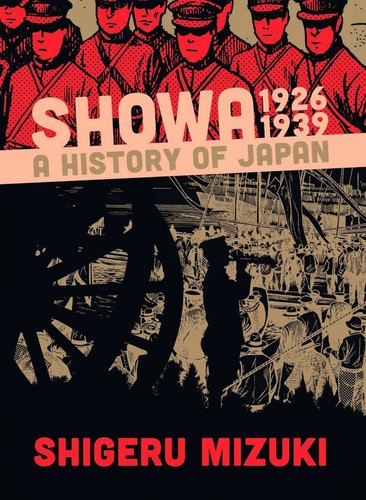
"First volume of Shigeru Mizuki's meticulously researched historical portrait of twentieth century Japan. This volume deals with the period leading …
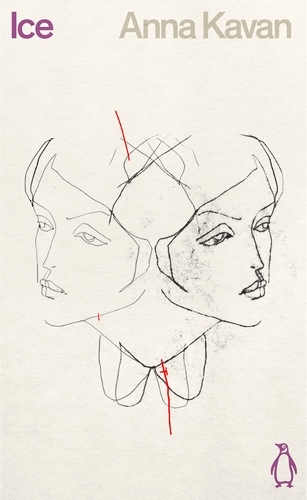
No one knows why the ice has come, and no one can stop it. Every day it creeps further across …

